The confirmed LEGO Skylines gameplay loop
The official description supports a simple high-level loop: place the first home, provide basic city needs, add homes and jobs, expand services and culture, unlock more options, improve city rating and happiness, and personalize the result. This is a synthesis of named official systems, not a published tutorial sequence.
- Start
- One plot + first house
- Maintain
- Roads · power · food · water
- Grow
- Homes · jobs · services
- Progress
- Unlocks · rating · happiness
Starting with a single plot
Paradox says players begin with one plot and build their first house. The neighborhood can then grow into a living metropolis shaped by player decisions. That is the strongest confirmed early-game progression detail; tutorial objectives, starting money, plot prices, and unlock thresholds are not public.
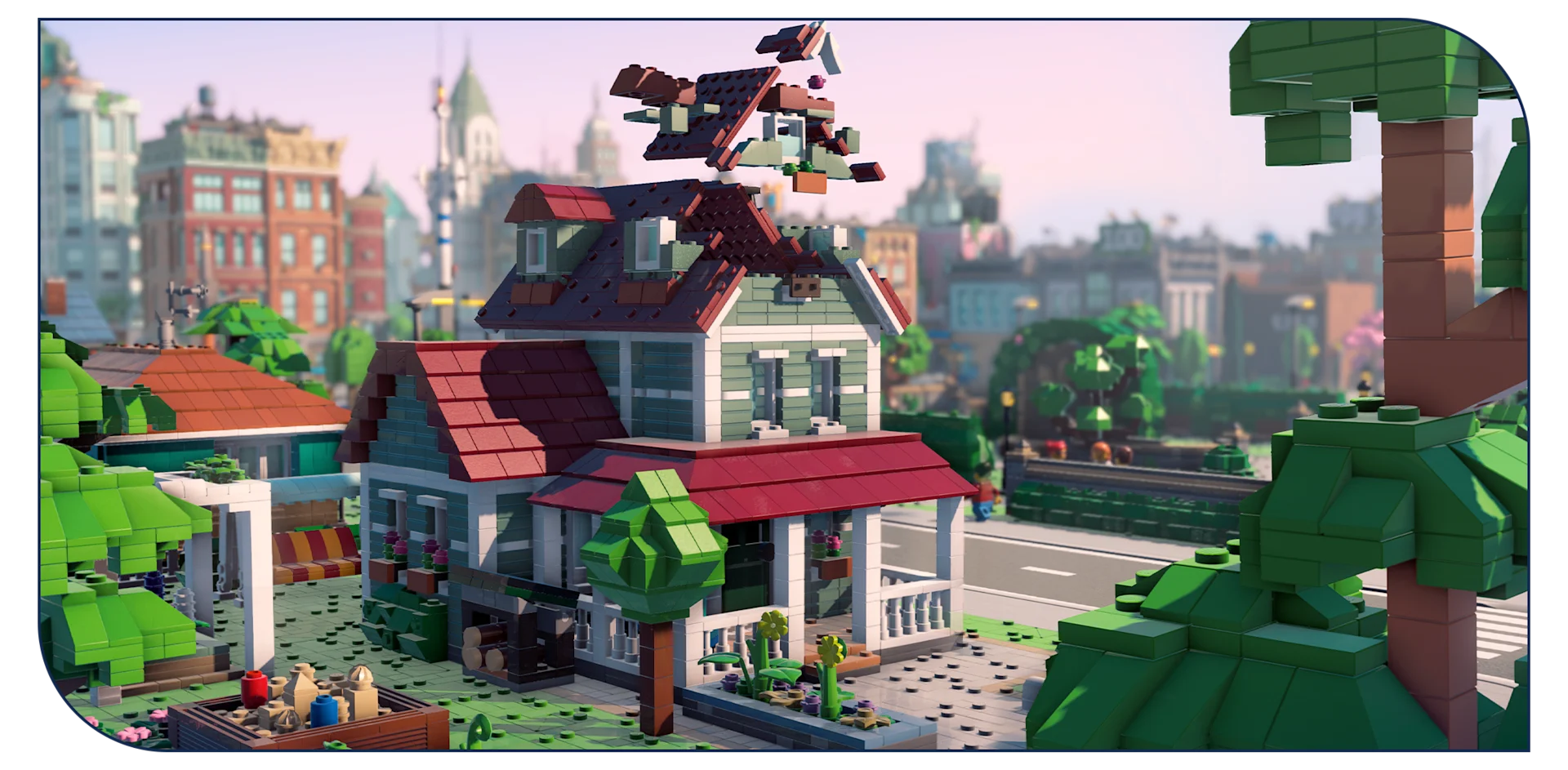
Roads, electricity, food, and water
Official launch material explicitly names roads, electricity, food, and water as basic needs for a functioning city. In the IGN interview at 00:02:17.32, Lasse Liljedahl describes traffic as one aspect alongside beauty, appeal, communication, and leisure; detailed traffic management, road hierarchies, and logistics remain unknown.
Farms and wheat are confirmed, with the official description playfully connecting wheat to bakeries and donuts. That supports a food-production theme but not a full supply-chain system.
Homes, jobs, happiness, and city services
Citizens need homes and jobs, and they can enjoy green parks. Hospitals, garbage collection, and sewage are named services. At 00:05:20.40, Lasse Liljedahl also names police among typical city services, alongside electricity, sewage, water, and healthcare; the interview does not define police behavior or coverage. At 00:08:25.28, he says LEGO citizens are individual minifigs with individual simulation, while noting that the mechanics differ from Cities: Skylines.
No numerical happiness formula, service radius, staffing system, citizen lifecycle, or difficulty setting has been published.
How progression is described
The confirmed progression runs from a first plot and house toward a larger city, with more buildings and services unlocking along the way. City rating and happiness are named outcomes. At 00:05:20.40, XP is mentioned only conditionally as an example, so XP progression is not confirmed. Exact milestones, stars, currencies, challenge modes, and fail states remain unknown.
Customization is a gameplay pillar
Paradox describes customizable plots and buildings plus many LEGO decorations. At 00:02:56.64, Lasse Liljedahl says the city is built building-by-building rather than brick-by-brick; at 00:03:41.92, Jonna Liikanen describes personalization through decorations, assets, and accessories. The exact editor controls, custom model import, Stud.io integration, and mod support remain unknown.
Major gameplay details still unknown
- Zoning rules versus fully manual placement.
- Taxes, budgets, loans, or other economy controls.
- Detailed traffic AI, public transport, and trains.
- Fire, education, and other unnamed services; police is named but its mechanics are unknown.
- Weather, disasters, scenarios, and difficulty modes.
- How Nintendo's Online Play label is used.
These topics are worth monitoring, but none belongs in a confirmed feature list today.
Sources
Official and official-store sources supporting this page. Community questions can shape coverage but do not establish game facts.
- Paradox Interactive: LEGO Skylines FAQ (Official, checked 2026-08-31)
- Paradox Interactive: Announcement press release (Official, checked 2026-08-31)
- Paradox Interactive: Official game overview (Official, checked 2026-08-28)
- IGN: How LEGO Changes The Much-Loved Skylines Formula | gamescom 2026 (Media, checked 2026-08-31)